20 Years of Apitherapy in Switzerland:
Bringing the International Community Together
Autor: Simona Bisboaca
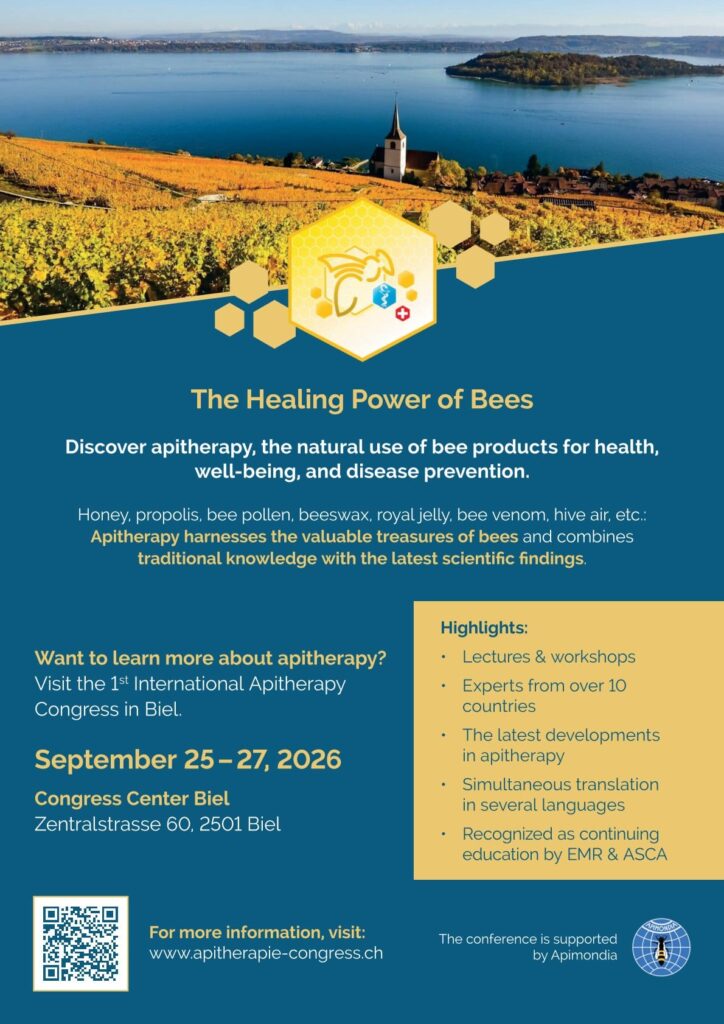
In 2026, the Swiss Apitherapy Association celebrates its 20th anniversary. To mark this important milestone, the Association is organising the 1st International Apitherapy Congress in Switzerland, which will take place from 25 to 27 September 2026 at the Palais des Congrès in Biel/Bienne.
For three days, Switzerland will become a meeting point for people who work with bees and bee products from very different perspectives: beekeepers, researchers, laboratory specialists, healthcare professionals, apitherapists and other professionals involved in this field.
Speakers from more than ten countries across Europe and North Africa will share their knowledge and practical experience, and all presentations will be simultaneously interpreted into English, German and French, making the Congress truly accessible to an international audience.
From the hive to science and practice
Honey, propolis, royal jelly, bee venom and other bee products have been used by humans for centuries. Today, however, understanding their potential also requires us to look more closely at their origin, composition, quality, processing and appropriate use.
This is where collaboration between different professions becomes particularly important.
Beekeepers are at the beginning of this chain. They understand the bees, their environment and the conditions under which honey, propolis, pollen and other hive products are produced and harvested.
Researchers, laboratories and specialists in quality and standardisation help characterise these natural products, study their composition and biological properties, and develop reliable methods and criteria for evaluating their quality.
Food scientists, pharmacists and product developers bring another important dimension: transforming raw bee products into well-characterised preparations and products while considering processing conditions, stability, quality and intended applications.
And finally, apitherapists and healthcare professionals contribute their experience with the practical use of bee products.
Each of these perspectives is valuable on its own. Bringing them together creates an important bridge between the hive, science, product quality and practice.
This is one of the reasons why an international meeting dedicated to apitherapy is particularly valuable.
Three days dedicated to bee products
The programme in Biel/Bienne reflects the remarkable diversity of the field.
Among the subjects presented during the Congress are the quality of honey for therapeutic purposes, the use of propolis in neurology, dentistry and veterinary medicine, research into the effects of propolis on cytokine secretion, bee venom, Apilarnil and queen larvae, immunity and api-nutrition, as well as the challenges of multidrug resistance.
1st International Apitherapy Congress in Switzerland
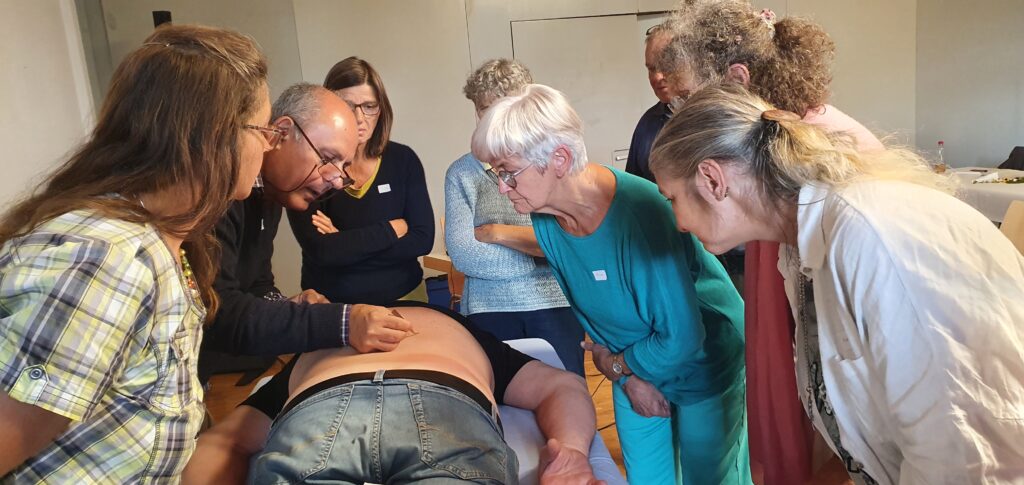
The programme combines scientific and professional lectures with practical experience. A round-table discussion is planned for Saturday evening, while Sunday afternoon will include workshops providing opportunities for more practical exchange.
The diversity of the speakers is equally significant. Researchers, physicians, pharmacists, veterinarians, nutrition specialists and experienced apitherapy practitioners will contribute different perspectives to a common question: how can we better understand and use the potential of bee products in the light of current knowledge? The Congress itself describes this connection between therapeutic potential and current scientific knowledge as one of its central objectives.
More than a congress
For a professional community, a congress is not only about listening to presentations.
It is also about meeting the person behind a study, discussing an observation that cannot fit into a presentation, comparing experiences from different countries and discovering how another specialist approaches the same bee product from a completely different perspective.
A beekeeper may look at propolis and think about the colony, botanical environment and harvesting conditions. A laboratory specialist may look at the same propolis and consider analytical parameters and variability. A product developer may focus on extraction, standardisation and stability, while an apitherapist considers how the final preparation can be used in practice.
It is when these perspectives meet that our understanding of bee products can move forward.
This exchange is particularly important because bee products are natural materials. Their composition is not automatically identical from one geographical or botanical origin to another, and processing can add another layer of variability. Dialogue between those who produce, analyse, study, process and use them is therefore essential.
Celebrating 20 years – and looking forward
The 20th anniversary of the Swiss Apitherapy Association provides a fitting occasion to bring this international community together.
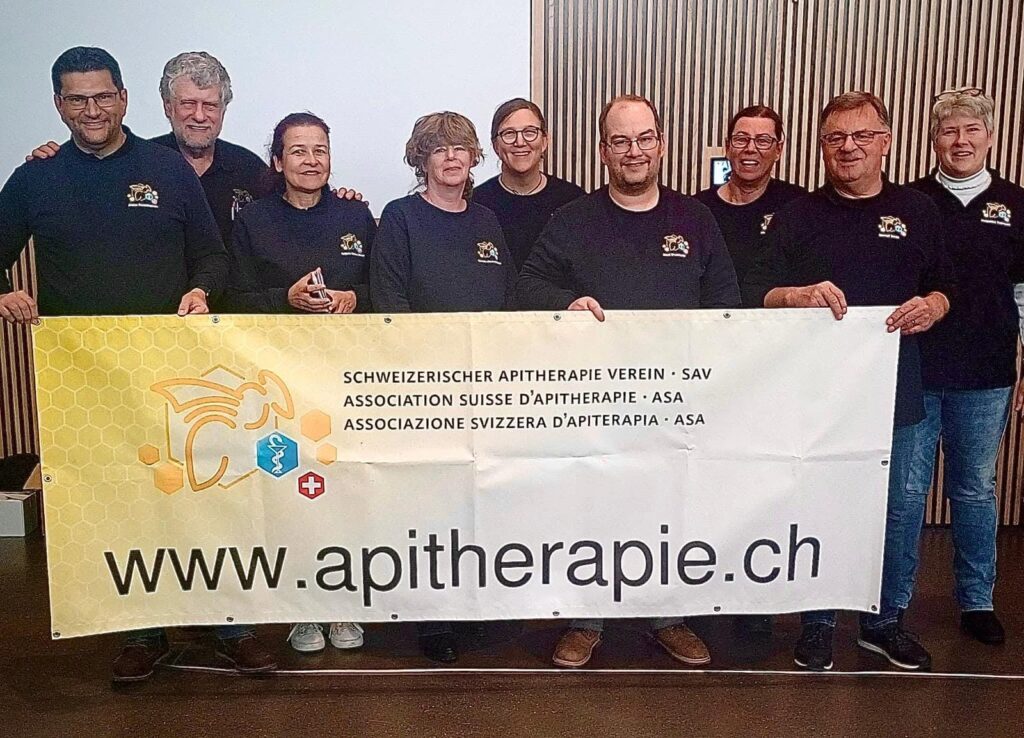
Since its creation, the Association has contributed to the exchange of knowledge and experience around apitherapy in Switzerland. Twenty years later, under the presidency of Marcel Strub, the Association (Schweizerischer Apitherapie Verein) is organising the first International Apitherapy Congress in Switzerland, opening this exchange of knowledge and experience to an even broader international community.
For beekeepers, scientists, apitherapists and professionals working with bee products, Biel/Bienne will offer three days to learn from one another, question established ideas, discover different approaches and create new professional connections.
Because the future of apitherapy depends not only on preserving traditional knowledge, nor only on generating new scientific evidence.
It also depends on bringing together the people who know the bees, the people who study their products, the people who transform and evaluate them, and the people who use them.
This September, they will meet in Switzerland.
1st International Apitherapy Congress in Switzerland
25–27 September 2026
Palais des Congrès, Biel/Bienne, Switzerland
Presentations with simultaneous interpretation in English, German and French.
About the author
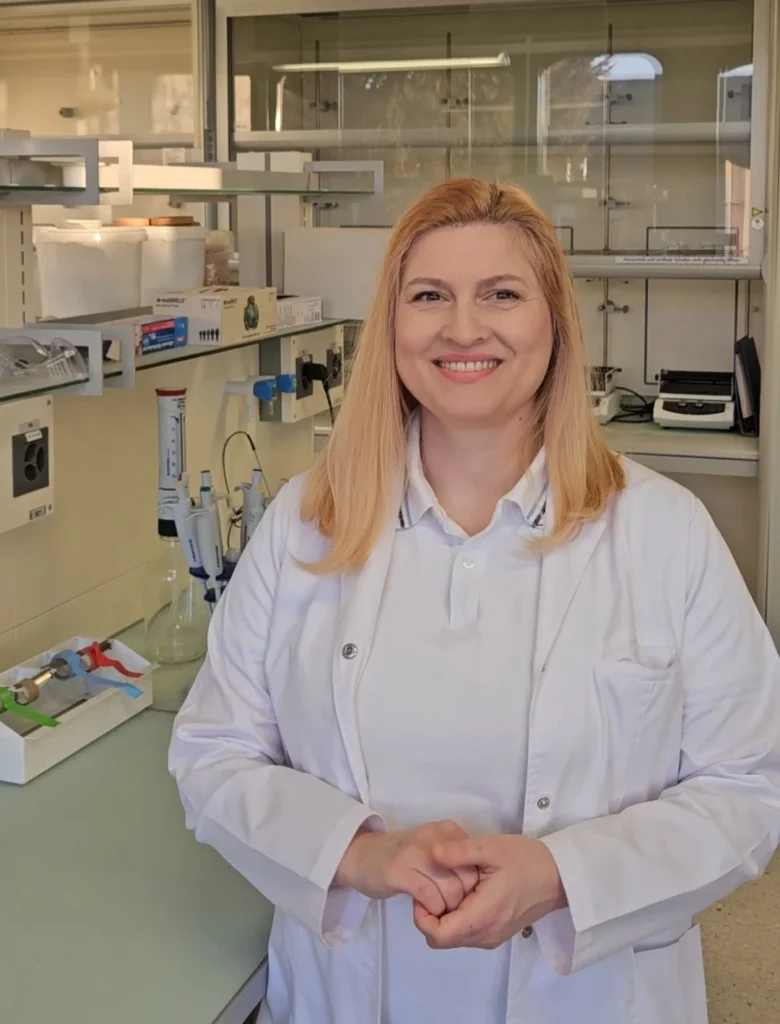
Simona Bisboaca is a food engineer, researcher and inventor, a member of the Swiss Apitherapy Association and member of the European Apitherapy Scientific Committee. As an ISO expert, she contributed to the development of ISO 24381:2023 for raw propolis and is involved in international standardisation work on propolis extracts.