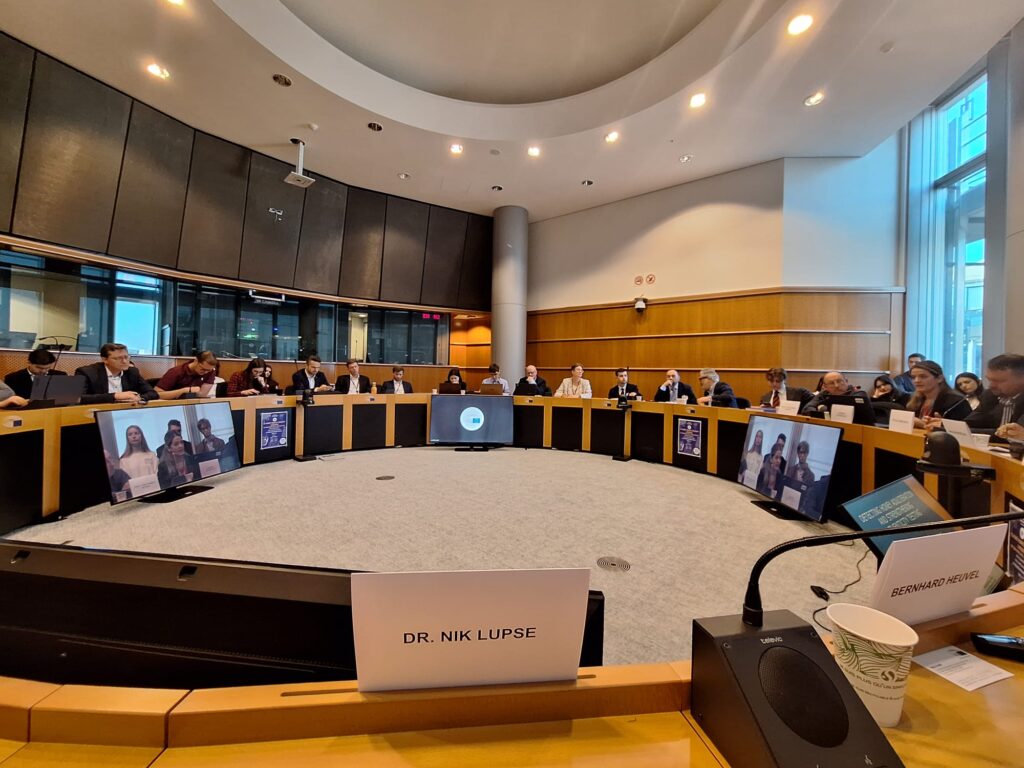
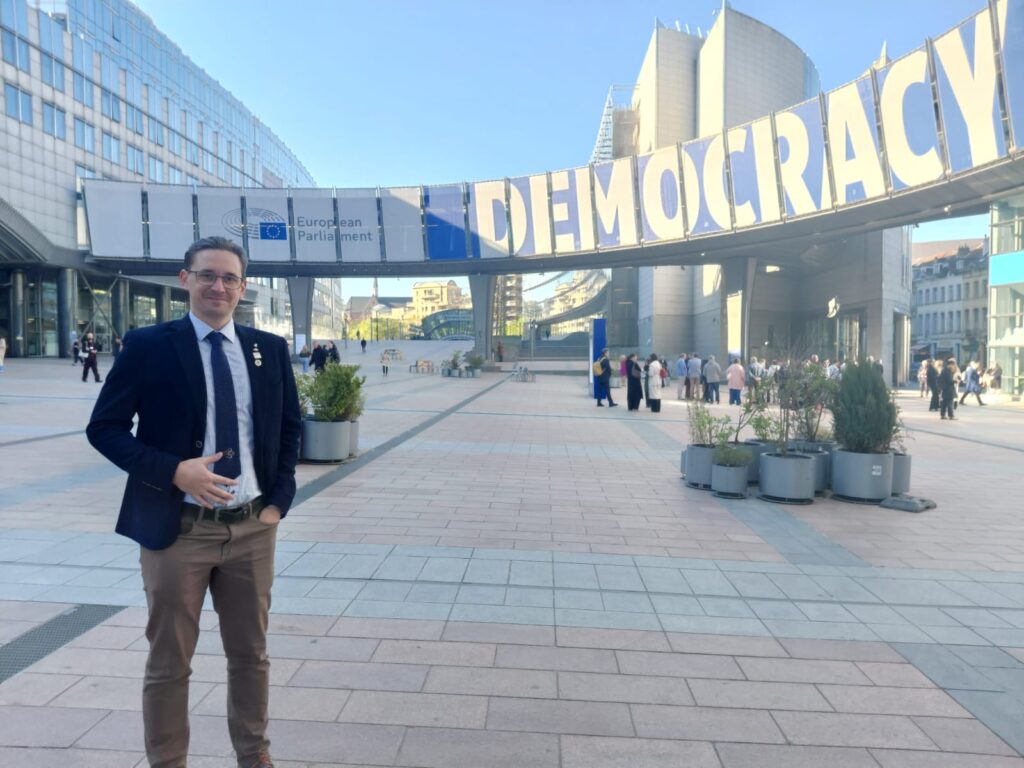
Today at the European Parliament, policymakers, scientists, and industry leaders gathered for the high-level conference “EU Honey Market Integrity: Trade Importance and Fraud Risks.” Hosted by MEP Elena Yoncheva, the event addressed a deepening crisis regarding the survival of the European beekeeping sector in the face of sophisticated fraud and a flood of low-priced imports.
Representing over 420,000 beekeepers across 32 countries, Dr. Nik Lupše, head of the Scientific Committees for the European Beekeeping Association (EBA), delivered a sobering assessment of the market. He warned that while the EU is only 63% self-sufficient in honey, domestic producers are being driven out of business by imports entering the Union at prices below €2/kg, which is significantly lower than the European production cost of €8–€12/kg.
Dr. Lupše highlighted a staggering enforcement gap, noting that despite findings that more than half of honey from major exporters is non-compliant, these products continue to reach shelves because the EU lacks the essential infrastructure to stop them. Specifically, the EBA pointed to the absence of a designated EU Reference Laboratory (EURL) for honey authentication. Without legally binding analytical methods, Border Control Posts remain powerless to refuse entry to suspicious consignments. The EBA argues that scientific progress via projects like HarmHoney is insufficient without the “legal teeth” – if this trend continues, fraudsters will always be ahead of trusted local producers if lack of political will to tackle this issue continues.
The integrity of the market is further threatened by preferential trade agreements, not only with Mercosur countries, but also countries like Vietnam, Ukraine, and Mexico. The EBA presented data suggesting these nations may be acting as trade hubs, where honey is imported from elsewhere, blended, and re-exported as local product to evade tariffs. Dr. Lupše emphasized that existing safeguard mechanisms are purely reactive, often only taking effect after the damage to beekeepers is irreversible. He noted that while you can trade honey, you cannot import pollination, placing the security of the European food chain at risk.
Beyond economic concerns, the EBA raised alarms regarding public health. Fake honey, which is often an overload of refined sugars, lacks the natural enzymes and antioxidants of genuine honey and may contribute to chronic health issues like diabetes and kidney damage. To combat this, the EBA proposes three urgent policy shifts: the reclassification of honey as a high-risk product for fraud to mandate reinforced physical checks, the immediate establishment of an EURL, and the implementation of real-time digital traceability from the hive to the border.
In his concluding remarks, Dr. Lupše warned that upcoming mandatory labeling regulations will be technically unenforceable without improved analytical methods and stricter oversight. It was emphasised that the EBA remains ready to provide technical expertise to transform existing legislative tools into a robust shield for European consumers and producers alike.
Thank you to Ms. Yoncheva for organizing the event and expressing her concern. Thank you also to all participants who were united by the message of the European Beekeepers’ Federation. It is now up to politicians to heed the voice of experts and to really protect bees, beekeepers and consumers . . . with actions!